

Electromagnetic Bridge Crane with Rotating Magnet
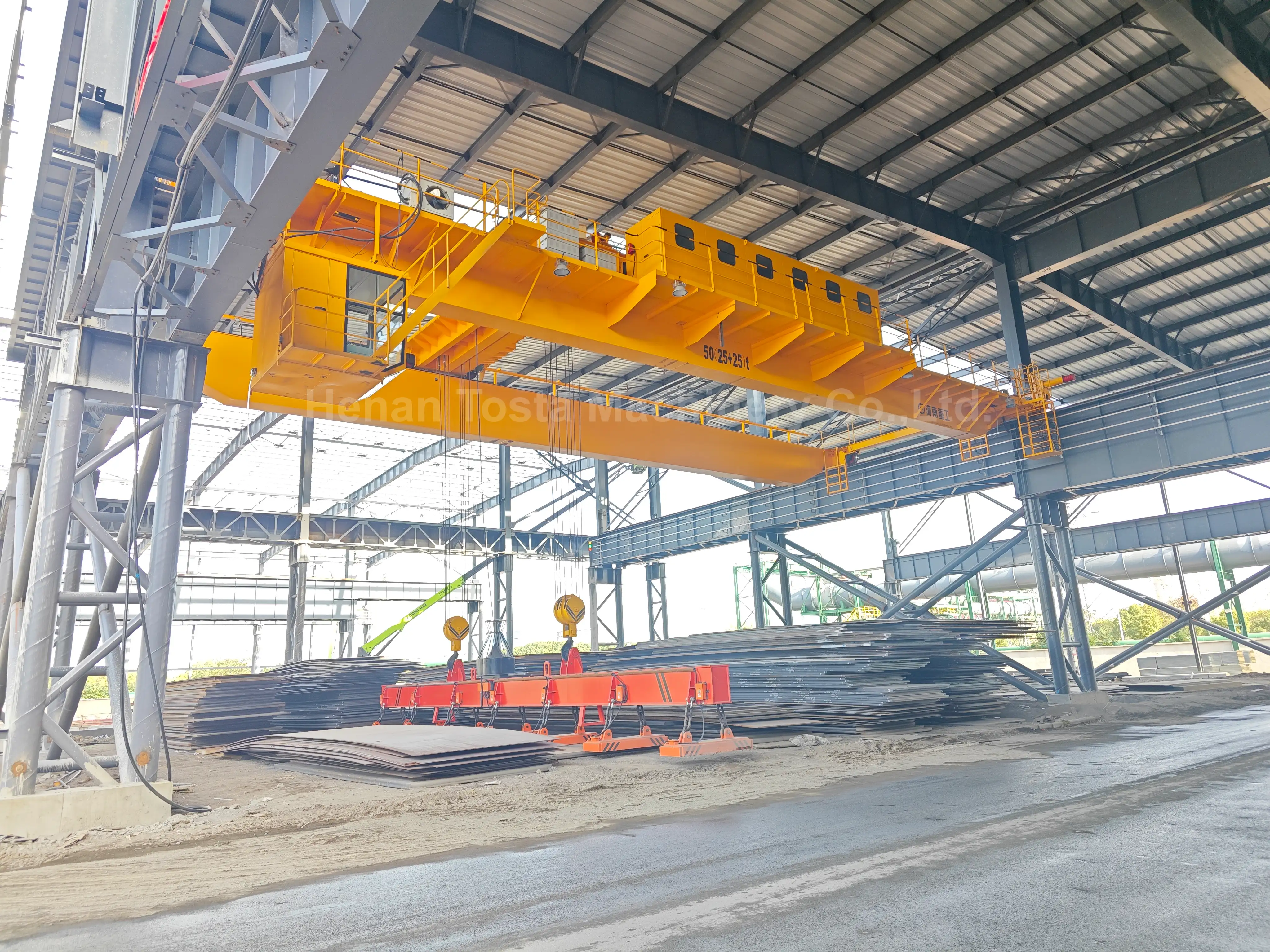
An electromagnetic bridge crane is designed for handling steel plates, billets, scrap metal, and other ferromagnetic materials. By replacing conventional hooks and slings with an electromagnetic lifting device, it helps reduce manual handling and improve material-handling efficiency in industrial facilities.
Also known as an electromagnetic overhead crane or magnetic overhead crane, this equipment is widely used in steel mills, scrap yards, foundries, and steel processing plants.
How Does an Electromagnetic Bridge Crane Work?
The crane uses a DC-powered electromagnetic chuck to attract and lift steel materials. The operator positions the magnet over the load, energizes it, and moves the material to the designated location. Switching off the current releases the load.
For safer operation, the system can incorporate a backup power supply to maintain magnetic holding force during a power failure, along with a demagnetizing circuit for controlled load release.
Three Types of Rotating Electromagnetic Overhead Cranes:
Different rotating mechanisms suit different lifting and positioning requirements.
Top-Rotating Crane: The rotation mechanism is installed above the trolley, offering flexible positioning for steel plates and similar materials. Learn more.

Bottom-Rotating Crane: The rotation mechanism is positioned near the magnet, making it suitable for handling long steel plates and billets. Explore the design.

Hook-Rotating Crane: The hook block rotates to adjust the load’s orientation, providing flexibility for different material-handling tasks. View details.

Key Factors When Selecting a Magnetic Overhead Crane:
Choosing the right crane requires evaluating several factors, including lifting capacity, span, lifting height, duty class, magnet dimensions, material temperature, and power supply requirements.
The electromagnetic chuck must match the material’s size, weight, surface condition, and arrangement. Hot steel, air gaps, and bundled materials can affect magnetic lifting performance. Backup power and reliable load-release control should also be considered during system design.
The appropriate configuration depends on the specific operating environment and production requirements.

Industrial Applications:
Electromagnetic bridge cranes are commonly used for steel plate handling, billet transfer, scrap loading, foundry operations, and steel stock storage. Compared with conventional hook cranes, they can eliminate manual sling attachment for compatible loads and streamline repetitive lifting operations.
For projects requiring higher lifting capacities or demanding operating cycles, a double girder overhead crane may be considered as part of the overall lifting solution.

Henan Zhonggong Group: Serving Customers in More Than Ten Countries:
Henan Zhonggong Group has exported electromagnetic bridge cranes to customers in more than ten countries, providing lifting solutions for a variety of industrial applications. Its products are designed to meet different material-handling requirements, including steel plate lifting, billet transfer, and scrap handling.Henan Zhonggong Group provides electromagnetic overhead crane solutions tailored to industrial lifting requirements.
Through its international projects, the company has received positive feedback from customers for its lifting solutions. By tailoring crane configurations to specific operating conditions and material characteristics, Henan Zhonggong Group aims to help customers improve handling efficiency and meet their production needs.

Conclusion:
An electromagnetic bridge crane with a rotating magnet provides an efficient solution for lifting and positioning ferromagnetic materials. Selecting the right rotation mechanism, magnet configuration, lifting capacity, and safety system is essential for reliable operation.